
Keynotes
MMM 2027 is pleased to announce the following keynote talks.
The Art of Organizing Visual Data: Representations, Learned Sorting, Search, and Exploration
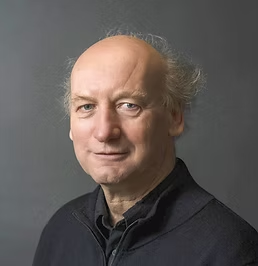
Prof. Dr.-Ing. Kai Uwe Barthel
Professor, Institute for Media and Computing, HTW Berlin
Abstract
Recent advances in visual AI open up new possibilities not only for representing and searching visual data, but also for learning how to organize it. This keynote explores approaches that combine learned representations, efficient data structures, and differentiable optimization to make complex visual spaces more accessible and useful.
The talk first reviews recent developments in scalable visual search, including deep learning encoders, vision-language models, and dynamic proximity graphs that enable efficient retrieval and interactive exploration of large image collections.
A particular focus is placed on gradient-based permutation learning, which allows the ordering of data elements to be optimized using differentiable methods. Recent approaches enable complex permutations to be learned with a small number of parameters, supporting applications ranging from visually coherent image arrangements and compression of 3D Gaussian Splatting scenes to combinatorial problems such as Sudoku.
Finally, the talk provides an outlook on more expressive feature representations for image color distributions, aiming to better capture perceptual color similarities and improve visual organization and retrieval.
Together, these developments demonstrate how learning both representations and data organization can lead to more efficient, scalable, and intuitive ways of exploring visual information.
Biography
Kai Uwe Barthel is a professor at the Institute for Media and Computing at HTW Berlin, where he previously headed the Visual Computing Group. His research focuses on visual computing, machine learning, image retrieval, and interactive exploration of large visual datasets.
He received his PhD with highest honors from Technische Universität Berlin (TU Berlin) in 1996, specializing in fractal image compression, and subsequently led research on 3D video coding. As head of R&D at N-Tec Media and LuraTech Inc., he contributed to the development of the JPEG2000 standard and advanced image and video compression technologies.
Since joining HTW Berlin in 2001, he has taught image analysis, machine learning, and information retrieval. He continues to pursue research and supervise doctoral students, with current interests including advanced visual representations, scalable image retrieval, learned sorting, and intuitive navigation of large image collections.
In 2009, he founded pixolution, a company specializing in visual image search. He has authored numerous scientific publications, holds several patents, and has received multiple awards for his work.
The Return of the Always-On Assistant
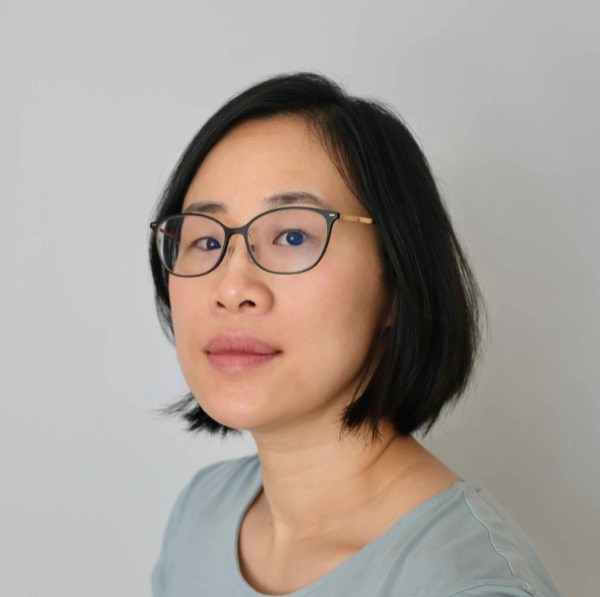
Angela Yao
Dean's Chair Associate Professor, School of Computing, National University of Singapore
Abstract
The idea of an always-on personal assistant is decades old. Wearable computing, lifelogging, and mixed-initiative interfaces each imagined a system that sees what we see, remembers what we forget, and offers help at the right moment. Each ran into the same limit: machines could record, but not understand, and the vision receded. Multimodal large language models are now reviving this vision, and with it, the old questions in a new form. An assistant running continuously over a video stream must decide what to attend to, what to remember, and when to speak. It must also recognize when a request is ambiguous enough to ask rather than guess. This talk revisits these questions through recent work on streaming egocentric video. It covers models that learn what evidence to gather and when it is enough to respond, user-centric spatial and personal memory, and interactive clarification. The talk ends by looking ahead to assistants that not only answer but act in the physical world, and to what it will take for people to trust a system that never switches off.
Biography
Angela Yao is a Dean's Chair Associate Professor in the School of Computing at the National University of Singapore, where she leads research on human-centric computer vision and video understanding. She has received Singapore's NRF Investigatorship (2026), NRF Fellowship for AI (2019), and the German Pattern Recognition Award (2018). She completed her PhD at ETH Zurich and previously held a faculty position at the University of Bonn. Angela will serve as Program Chair of CVPR 2027 and ICCV 2029.
Beyond Multimedia Modeling: Engaging Video Analytics and Generative AI
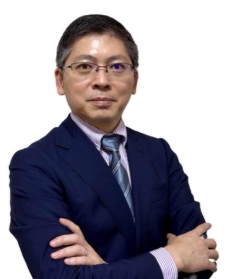
Dr. Jianquan Liu
Senior Director, NEC Laboratories Asia Pacific, Singapore; IPSJ Fellow & IEEE SPS Distinguished Industry Speaker
https://jqliu.gitlab.io/
Abstract
In this keynote talk, Dr. Jianquan Liu presents an industry perspective on the evolution from multimedia modeling to video analytics and generative AI. The talk begins with advances in video analytics, including action recognition, object tracking, human-object interactions, scene recognition, and behavioral pattern analysis, highlighting how multimedia content can be effectively modeled, analyzed, retrieved, and summarized. Going beyond conventional multimedia modeling, the talk then focuses on emerging opportunities for industry applications through multimodal intelligence and generative AI. In particular, it explores how large language models (LLMs) can enhance video understanding through semantic interpretation, captioning, visual question answering, and storytelling. Industry case studies illustrate these capabilities while addressing practical limitations and challenges. The talk further introduces NEC's narrative summarization framework for tackling key challenges in video analytics and concludes with a demonstration of "Video with LLM" technology for automating traffic accident investigation reports. Overall, the talk highlights how video analytics and generative AI can extend multimedia modeling toward intelligent solutions that understand complex real-world scenarios and address practical industry challenges.
Biography
Jianquan Liu (FIPSJ'25) is currently a Senior Director of NEC Laboratories Asia Pacific (NLAP) and Senior Principal Researcher at NEC Corporation, working on the topics of multimedia data processing. He is selected as IEEE SPS 2026 Distinguished Industry Speaker, also a Visiting Professor at Nagoya University and an Adjunct Professor at Hosei University, Japan. Prior to NEC, he was a development engineer in Tencent Inc. from 2005 to 2006, and was a visiting researcher at the Chinese University of Hong Kong in 2010. He has published 80+ papers at major international/domestic conferences and journals and filed 100+ PCT patents. He also successfully transformed these technological contributions into commercial products in the industry. For his industry contributions, Dr. Liu has received the Japan Minister of Economy, Trade and Industry (METI) Award at 38th Advanced Technology Award in 2025, the 25th Anniversary Special Award at CEATEC AWARD 2024, the APSIPA 2024 Industrial Distinguished Leader, the 2024 DBSJ Young Researcher's Achievement and Contribution Award, the 2023 IEICE Achievement Award, the 2023 Niwa & Takayanagi Achievement Award from the Institute of Image Information and Television Engineers (ITE), the 69th Electrical Science and Engineering Promotion Award, and the Minister of Education, Culture, Sports, Science and Technology (MEXT) Award in 2021, the 2021 KANTO Invention and Innovation Award from Japan Institute of Invention and Innovation (JIII), the 2020 IPSJ Research and Engineering Award and the 2018 IPSJ Industrial Achievement Award from the Information Processing Society of Japan (IPSJ). Currently, Dr. Liu is/was serving as a Member-at-Large of IEEE SPS Industry Board (2025-2026); the Industry Co-chair of IEEE ICIP 2023, 2025 and ACM MM 2023, 2024, 2025; the General Co-chair of IEEE MIPR 2021, 2026, BESC 2026; the PC Co-chair of IEEE IRI 2022, ICME 2020, AIVR 2019, BigMM 2019, ISM 2018, ICSC 2018, ISM 2017, ICSC 2017, IRC 2017, and BigMM 2016, etc. He is a Fellow of IPSJ, a senior member of IEEE, ACM, and IEICE, and a member of ITE, APSIPA and DBSJ, a member of expert committee for IEICE Mathematical Systems Science and its Applications (2017-), and IEICE Data Engineering (2015-2021), and an associate editor of IEEE TMM (2021-2024), ACM TOMM (2022-), EURASIP JIVP (2023-), IEEE MultiMedia Magazine (2019-2022), ITE Transaction on Media Technology and Applications (2021-), APSIPA Trans. on SIP (2022-), and the Journal of Information Processing (2017-2021). Dr. Liu received the M.E. and Ph.D. degrees from the University of Tsukuba, Japan.